by Todd DePastino
Our country does a lot with veterans. We admire them, honor them, invoke them, and thank them often. What we don’t often do, however, is listen to them. Real listening is more than saying “thank you for your service.” It takes time, patience, and a willingness to hear stories that are funny, painful, strange or unresolved.
This is the space that the Veterans Breakfast Club tries to create. Founded in Pittsburgh in 2008, the nonprofit dedicated to bringing veterans, family members, and the public together in what it calls “communities of listening.” The mission is to connect, educate, heal, and inspire through veterans’ stories.
The Veterans Breakfast Club’s origin began the fall of 2008, when 39 World War II veterans gathered in a hotel ballroom south of Pittsburgh to share stories. Very quickly, it became clear that the men in the room were opening up in unanticipated ways. Their stories were extraordinary and often long untold.
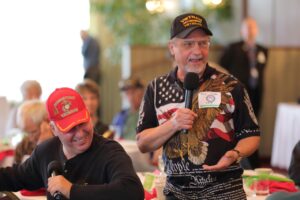
VBC gives veterans an opportunity to tell their stories.
A second gathering was held and was open to family members and the public. More people came. One veteran’s daughter said, “I’ve never heard my dad tell these stories before.” That moment revealed a need for veterans to talk and for others to listen, including their own families. Since then, the club’s events are not be limited to veterans, because something powerful happens when spouses, children, neighbors, and students join the conversation.
The Veterans Breakfast Club has gone onto hold storytelling breakfasts in church basements, banquet halls, libraries, museums, and breweries. Veterans from every era—World War II through Iraq and Afghanistan—have found a place at the table. Some have spoken easily. Others still come only to listen.
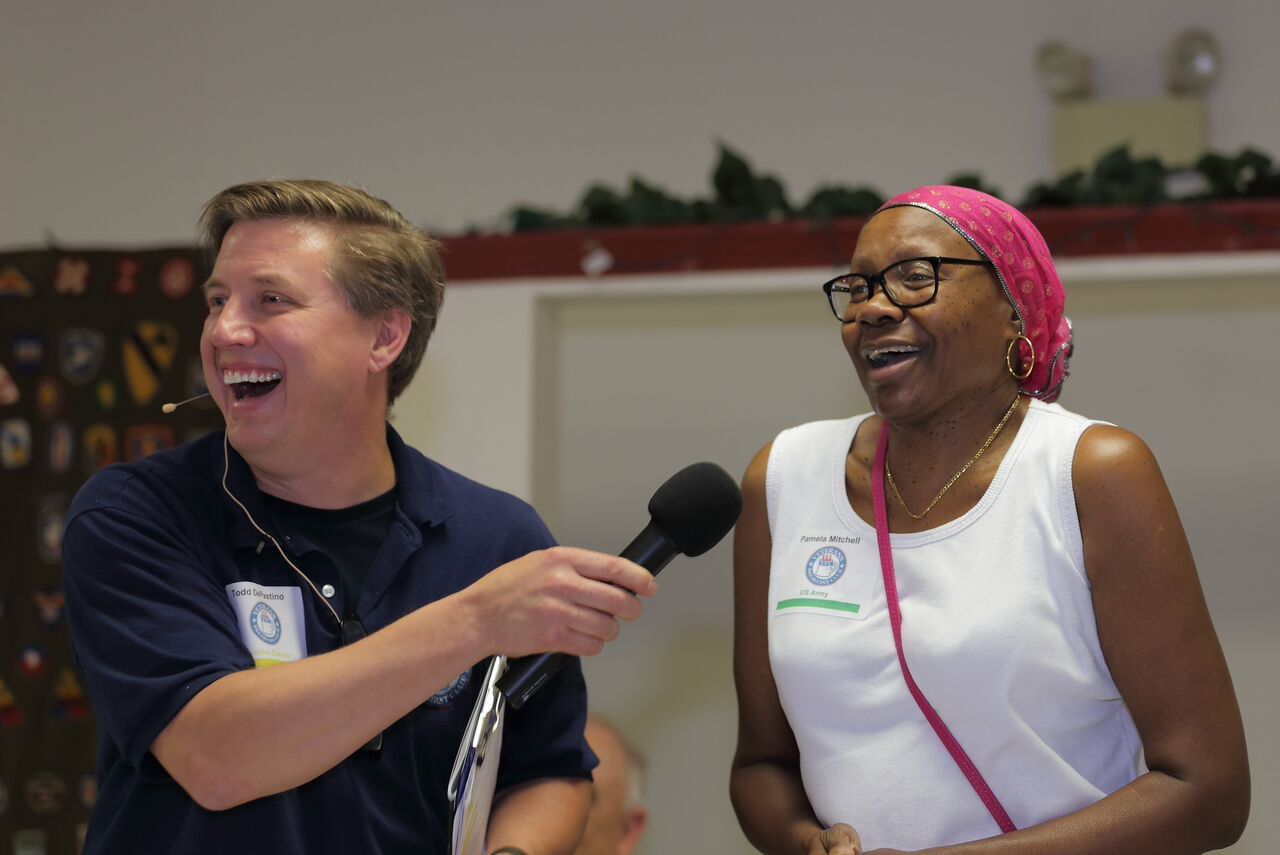
Veterans rarely tell stories in neat, polished form, so the breakfasts don’t feature speeches or lectures. A veteran may begin with a funny story about boot camp and end with the loss of a friend. Another may start with Army food and arrive at what it meant to come home to a divided country. The movement from laughter to grief and back again is common.
Before the pandemic, the club hosted dozens of in-person events across western Pennsylvania. When COVID shut down gatherings, the group reinvented itself online with weekly livestreams. Veterans and family members from across the country joined in on Zoom, Facebook, and YouTube.
Today, in-person events continue, along with two weekly livestream programs and a quarterly magazine that features in-depth stories and historical reflections drawn from the community.
The range of people who appear at VBC events is amazing. In any given week, you might meet a World War II codebreaker, a Vietnam medic, a Cold War missileer, a Marine from Fallujah, a Red Cross volunteer, or a Gold Star family member. The military experience is too vast to fit into a single narrative.
What makes the club’s work meaningful is not just historical preservation, but the social power of storytelling. Stories remind veterans they are not alone and give families a chance to hear what was never said at the dinner table. And they help those who’ve never served understand the bonds, burdens, and benefits of military life.
Veterans have shared that these breakfast gatherings are healing. That is the strength of putting people together and starting to talk. There’s no requirement that a story be heroic or uplifting. In an age of noise and quick judgment, open-minded listening may be an underrated skill. And the stories shared bring to life a history that belongs to everyone.
If you are a veteran, family member, or simply someone who cares about those who have served, you are inviting you to join the Veterans Breakfast Club. All programs are free and open to the public.
To learn more about the Veterans Breakfast Club, visit VeteransBreakfastClub.org.